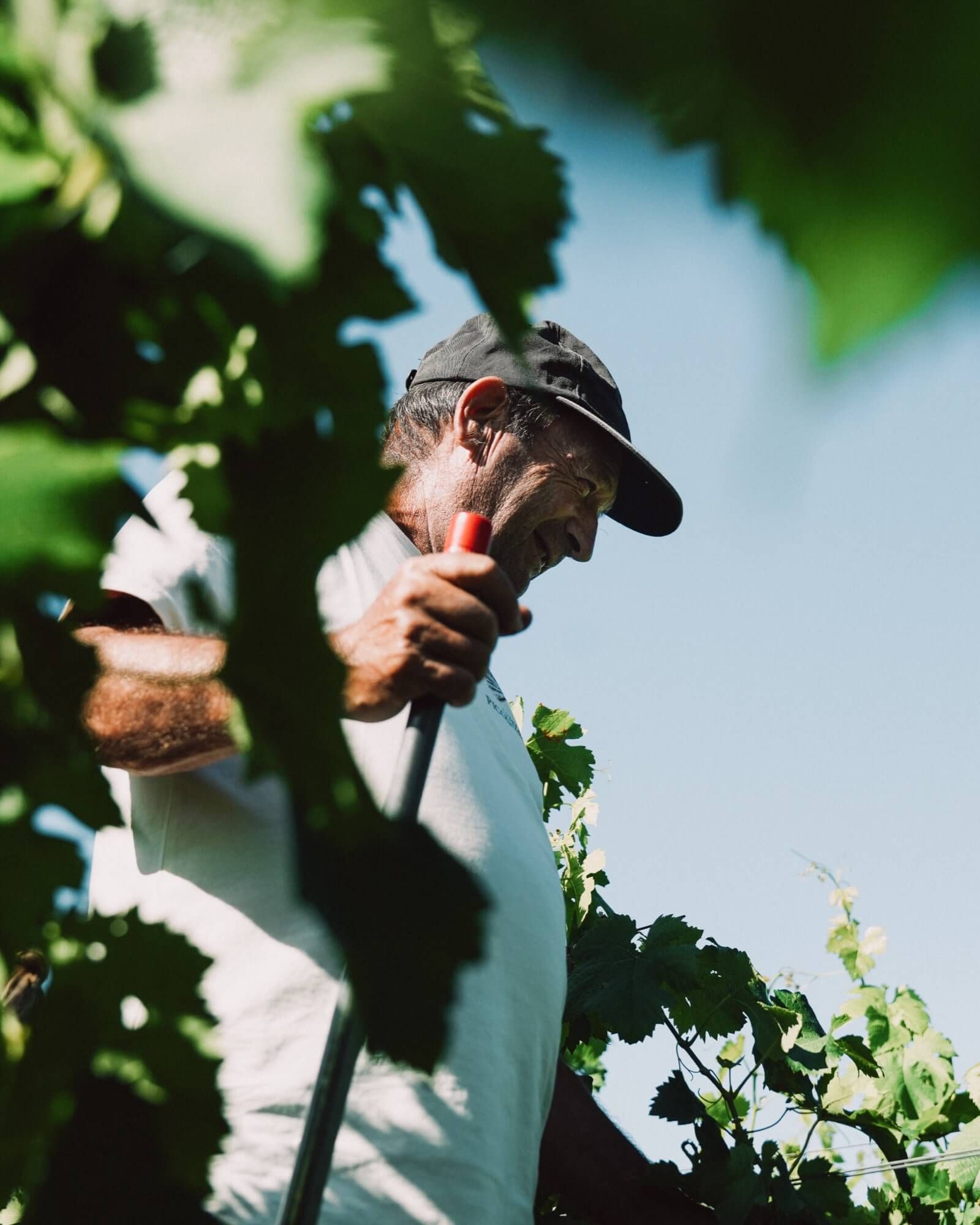
Our expertise
One of the last six urban vineyards in the Bordeaux metropolitan area.
The terroir
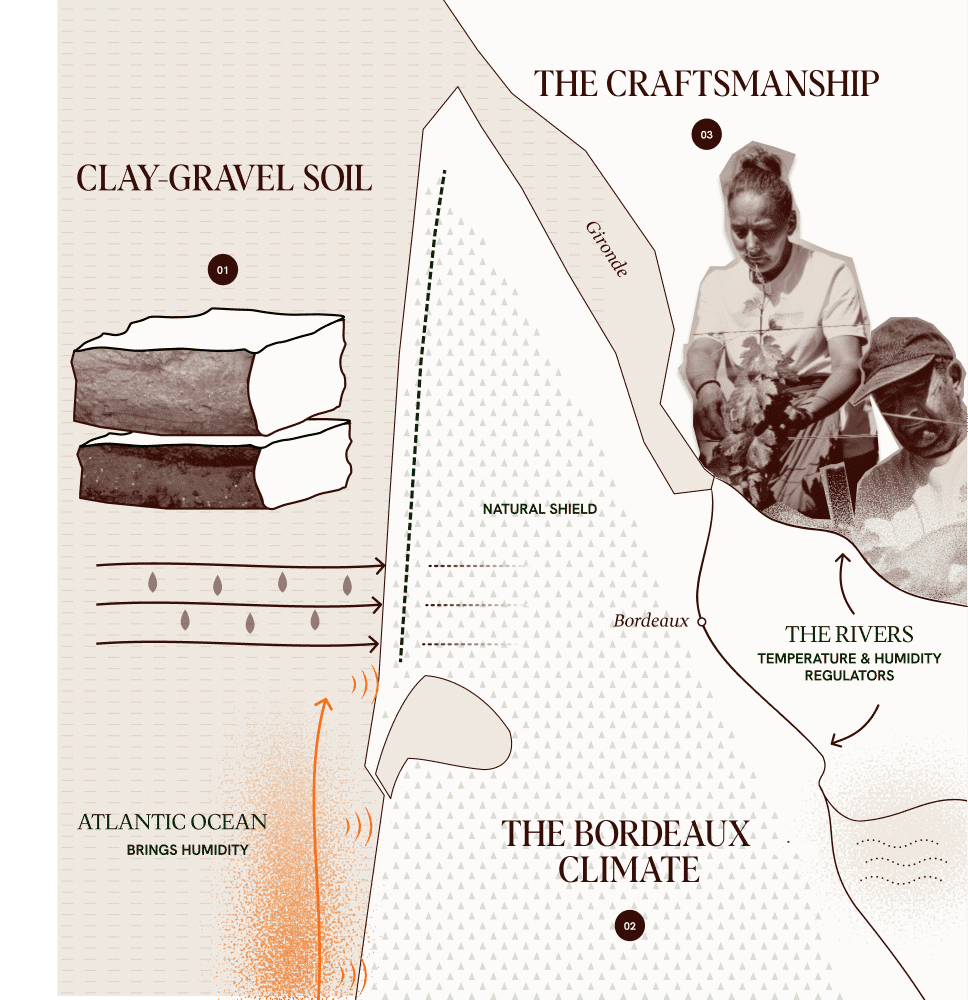
If the name “Piquecaillou” comes from its Günz gravel deposited by the Garonne, the greatness of its terroir arises from a three-part harmony. The unique meeting of soil, climate, and craftsmanship.
01 · Clay-gravel soil
Deep Günz gravels resting on a base of yellow and blue decalcified clays, ensuring remarkable water regulation in the face of climatic fluctuations.
02 · Bordeaux climate & its natural shields
Protected from Atlantic assaults by the Landes forest and tempered by the influence of rivers, the vineyard benefits from a mild and consistent microclimate, conducive to a slow and even ripening of the grapes.
03 · Craftsmanship
From the precision of parcel work to manual harvesting, the winemaker’s touch and the choice of balances guide the plant throughout the year to reveal the typicity and freshness of the place.
Strengths
A “radiator” effect
The pebbles absorb heat during the day and release it at night, promoting slow, even ripening.
Controlled hydration
Deep clay reserves provide a steady water supply, ensuring optimal grape ripening.
Well-drained soils
Water never stagnates, encouraging deep root growth and ensuring a steady supply of water and nutrients to the vines.
Viticulture
A vineyard shaped by balance and precision
At the heart of the appellation, the vineyard spans 25 hectares. With an average age of 25 years, the vines are planted at high density (6,900 to 10,000 vines per hectare), an ideal configuration for concentrating the fruit and promoting optimal ripeness.
Grape varieties
- Red wines (21 ha): 47% Cabernet Sauvignon, 45% Merlot, 8% Petit Verdot.
- White wines (4 ha): 90% Sauvignon Blanc, 10% Sémillon.
Living, sustainable viticulture
HVE-certified since 2018 (High Environmental Value) and with no CMR products used, the estate practises sustainable viticulture that respects its soils: winter cover crops, vine prunings shredded and returned to the soil, and targeted crop protection using sulphur- and copper-based treatments, such as the traditional Bordeaux mixture.
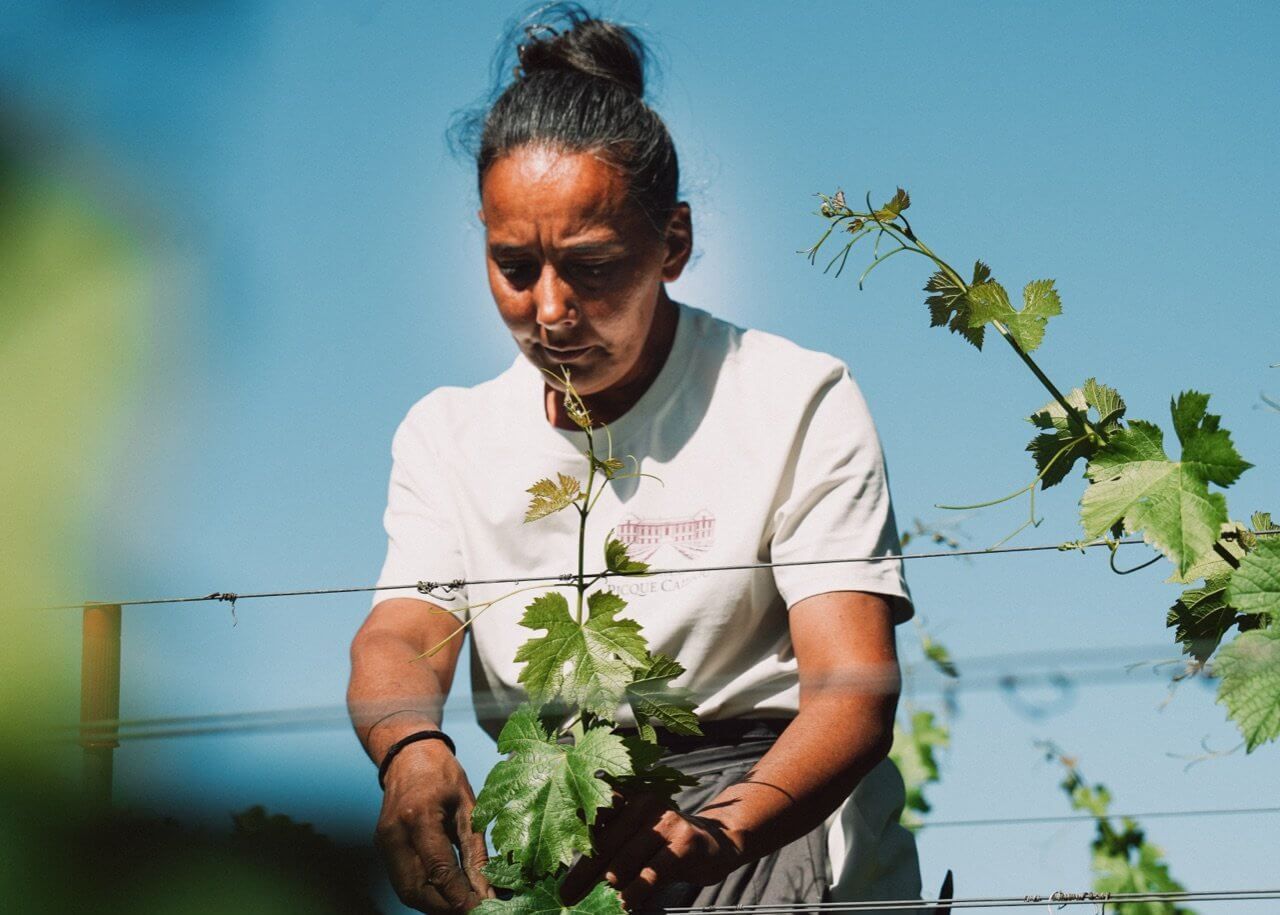
The art of handcrafted vineyard work
Soil management alternates with careful canopy maintenance, including traditional ploughing, Guyot pruning, leaf removal in July and crop thinning in early August. Hand harvesting takes place over a period of nearly six weeks, with grapes picked and transported in small crates to preserve the integrity of the berries.
Winemaking
In the vat room
The pursuit of precision begins in the vineyard, where hand harvesting is accompanied by rigorous sorting to ensure that only perfectly ripe berries are selected.
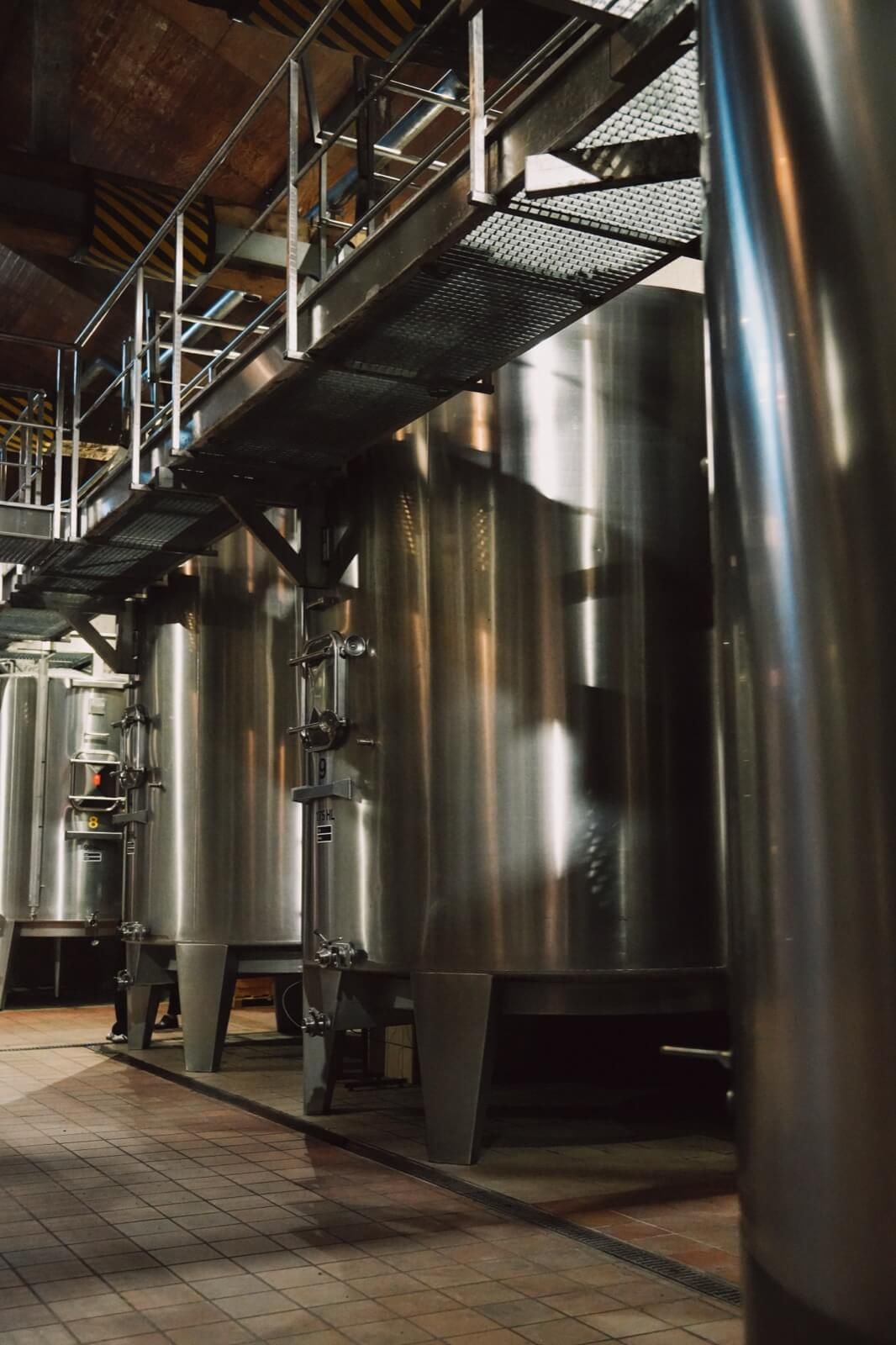
In the vat room, the red grapes are fermented in temperature-controlled stainless-steel vats, with gentle maceration techniques designed to preserve the purity of the fruit, aromatic freshness and fine tannins. For the white wines, fermentation begins in stainless-steel vats before the wine is quickly transferred to oak barrels, where fermentation continues to develop body, roundness and aromatic complexity.
Ageing
The ageing process then allows each wine to develop structure and finesse according to its individual needs:
- 12 to 14 months in oak barrels, including 30% new oak, followed by traditional egg-white fining.
- 7 months on the lees in barrels, with regular bâtonnage (lees stirring), enhancing richness, texture and complexity.
All bottling takes place directly at the estate, ensuring the traceability and quality of every vintage.
